
A Frustrating Problem With a Logical Explanation
You press the button on your garage door remote, the door starts its descent, and then — just before it reaches the floor — it stops and reverses back up. If this scenario sounds familiar, you're not alone. This is one of the most common garage door complaints we hear from homeowners in Punta Gorda and throughout Charlotte County.
The good news is that a reversing garage door is usually a safety feature working as intended. The not-so-good news is that something is triggering it incorrectly. Let's walk through the most common causes, what you can check yourself, and when it's time to call in a professional.
Understanding Why Garage Doors Have a Reversal Feature
Before we dive into troubleshooting, it helps to understand why your garage door is designed to reverse in the first place. Federal safety regulations have required automatic garage door openers to include a reversal mechanism since 1993. This system exists to prevent the door from closing on a person, pet, or object.
Two primary systems handle this safety function:
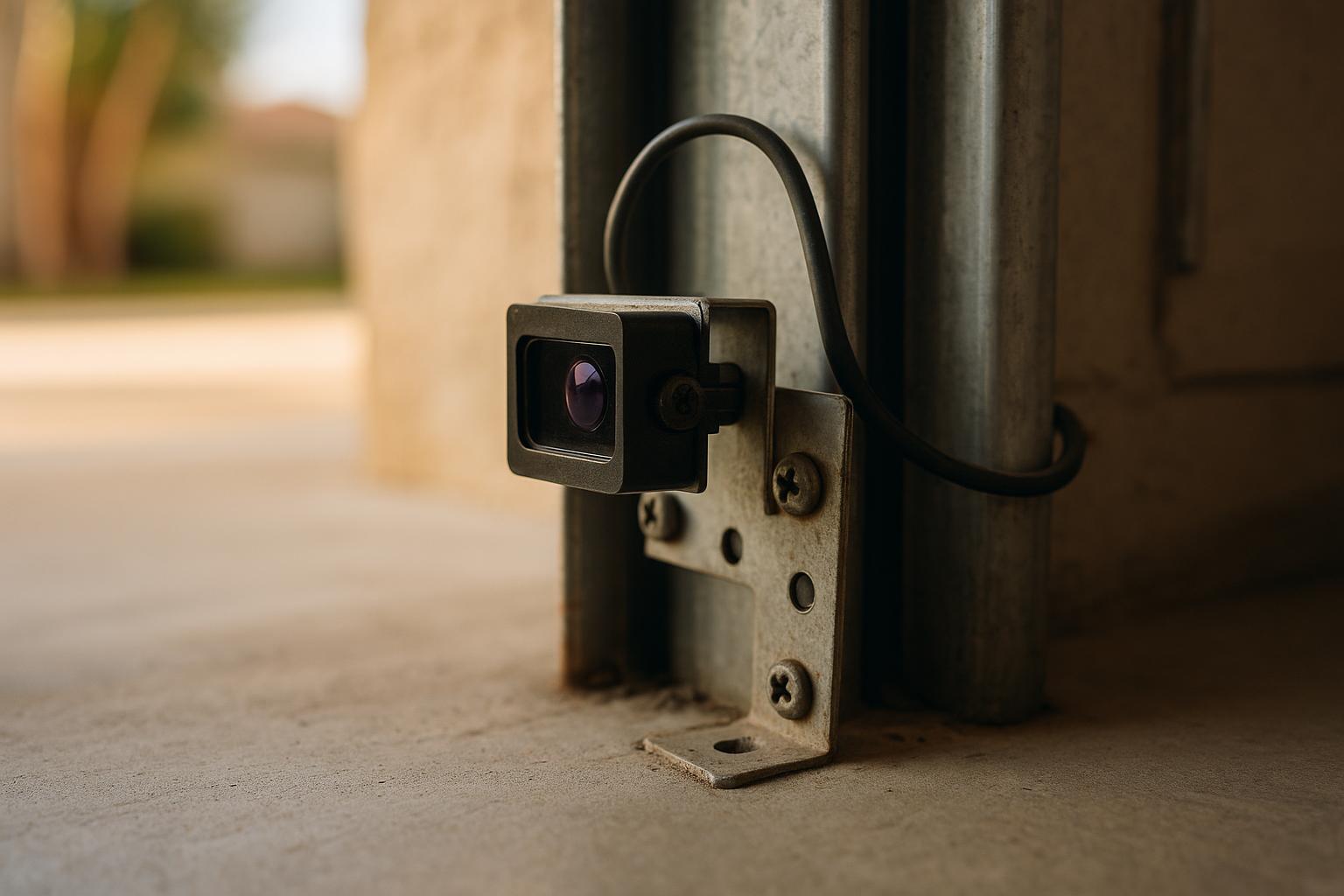
- Photo-eye sensors: These are the small sensors mounted near the bottom of your garage door tracks on either side. They project an invisible beam across the opening. If anything breaks that beam, the door reverses.
- Auto-reverse or force settings: The opener motor has sensitivity settings that detect resistance. If the door encounters an obstruction or unusual friction while closing, it reverses to prevent damage or injury.
When your door reverses unexpectedly, one of these systems is almost always involved.
Common Cause #1: Misaligned Photo-Eye Sensors
This is the number one reason garage doors reverse prematurely, and fortunately, it's often the easiest to fix. The photo-eye sensors on either side of your garage door opening need to be perfectly aligned to maintain their invisible beam. Over time, they can get bumped by a bicycle, lawn equipment, or even vibrations from the door itself.
Here's how to check:
- Look at both sensors. Most models have a small LED light — typically green on one side and amber or green on the other.
- If one light is blinking or off entirely, that sensor is likely misaligned or malfunctioning.
- Gently adjust the sensor bracket until the light becomes steady.
- Clean the sensor lenses with a soft cloth. In Punta Gorda's humid climate, condensation, dust, and even spider webs can obstruct the beam.
If both lights are solid after adjustment, test the door again. In many cases, this solves the problem completely.
Common Cause #2: Dirty or Obstructed Sensor Lenses
Florida's environment is tough on exterior components. Between the humidity, pollen, salt air, and insects that thrive in our subtropical climate, your photo-eye sensors can accumulate grime quickly. Even a thin film of moisture or a tiny cobweb stretched across the lens can interrupt the beam and cause the door to reverse.
Make it a habit to wipe down your sensor lenses with a clean, dry microfiber cloth every month or so. It takes ten seconds and can save you a service call.
Common Cause #3: Incorrect Close-Force Settings
Your garage door opener has adjustable force settings that control how much resistance the motor will tolerate before reversing. If the close-force setting is too sensitive, the door may interpret normal friction — from weatherstripping, a slightly warped track, or even temperature-related expansion — as an obstruction and reverse.
Most openers have two adjustment screws or dials on the back or side of the motor unit, labeled for open force and close force. Turning the close-force dial slightly (usually a quarter turn at a time) can help. However, be cautious — setting the force too high defeats the safety purpose. If you're unsure, this is a good time to have a technician handle the adjustment.
Common Cause #4: Damaged or Worn Tracks
Garage door tracks guide the door's rollers as it opens and closes. If a track is bent, dented, or has accumulated debris, it can create enough resistance to trigger the auto-reverse function. Visually inspect both tracks from top to bottom. Look for any obvious bends, gaps between the track and the wall, or buildup of dirt and grime.
Minor debris can be cleaned out carefully, but bent or damaged tracks should be repaired or replaced by a professional. Attempting to bend a track back into shape without the right tools can make the problem worse and create a safety hazard.
Common Cause #5: Broken or Worn Garage Door Springs
If your garage door springs are weakening or one has broken, the opener motor has to work significantly harder to move the door. This extra strain can trigger the force-reversal mechanism. You might also notice the door feels heavier than usual if you try to lift it manually, or it may not stay open on its own when disconnected from the opener.
Spring repair is not a DIY job. Garage door springs are under extreme tension and can cause serious injury if handled improperly. If you suspect a spring issue, contact a qualified garage door technician right away.
Common Cause #6: Wiring Issues
Over time, the low-voltage wiring that connects your photo-eye sensors to the opener unit can become damaged. Rodents, lawn equipment, and general wear can fray or sever these wires. If you've checked alignment and cleanliness and the sensor lights still won't stay solid, inspect the wiring for visible damage. Spliced or damaged wiring should be repaired by a professional to ensure reliable operation.
When to Call a Professional
Some of the fixes above — cleaning sensors, adjusting alignment — are perfectly safe for homeowners to handle. But if you've gone through the basic troubleshooting steps and your garage door is still reversing, it's time to bring in an expert. Persistent reversal issues can indicate problems with the opener logic board, worn-out springs, or structural issues with the door itself.
At Punta Gorda Garage Door, we diagnose reversing issues quickly and provide honest recommendations. We serve homeowners throughout Port Charlotte, North Port, Englewood, Rotonda West, and Murdock, and we understand the specific challenges that Florida's climate creates for garage door systems.
Preventive Maintenance Goes a Long Way
The best way to avoid unexpected garage door problems is regular preventive maintenance. A professional tune-up once or twice a year keeps your springs, tracks, rollers, sensors, and opener in proper working order. It also catches small issues before they turn into expensive repairs.
If your garage door has been reversing and you can't figure out why, don't ignore it. A door that won't close properly is a security risk and an inconvenience. Give us a call, and we'll get it sorted out — usually the same day.