
The Argument You're Having Right Now
One more season of "that's not my job" and the bill gets worse. A spring that's starting to sag now costs a couple hundred dollars to replace. Ignore it through another humid summer and a few afternoon downpours, and you're looking at a seized opener motor, a rusted track, or a door that drops hard enough to dent a car roof or crack the slab underneath. Landlord-tenant disputes over garage doors almost always start the same way: nobody wrote down who was responsible for what, and nobody checked the door closely when the lease started. By the time it fails, it's an emergency repair instead of a line item.
Who Typically Owns What
Most leases follow a simple split, even when it's not spelled out in writing: the landlord owns the big-ticket, structural, and safety-related parts, and the tenant owns day-to-day use and prompt reporting.
Usually the landlord's responsibility
- Springs, cables, and the lifting mechanism
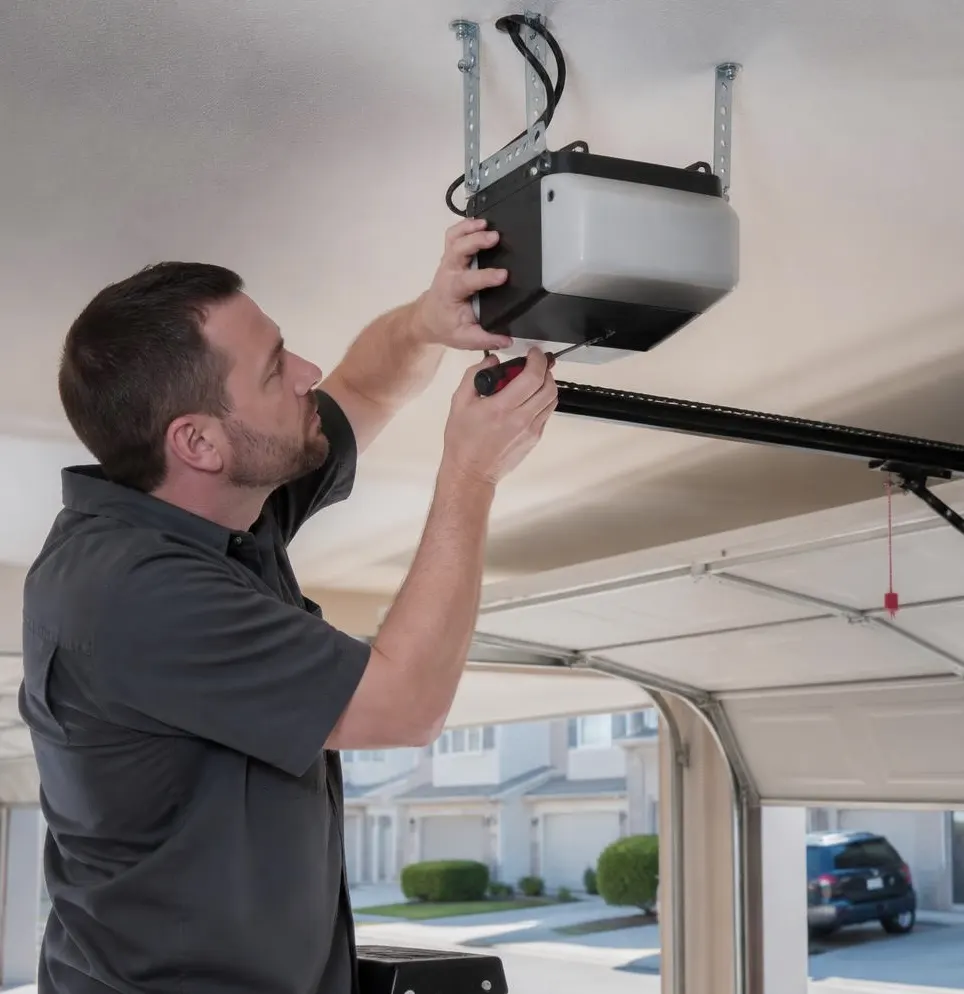
- The opener unit itself and its safety reversal system
- Panel, track, and roller condition — especially rust or warping
- Weatherstripping and seals that keep wind-driven rain out
- Any repair needed because of normal wear, age, or storm damage
Usually the tenant's responsibility
- Reporting problems (grinding noise, slow response, door not reversing) right away instead of waiting
- Keeping the track clear of debris, bikes, and storage boxes
- Replacing opener remote batteries and reprogramming codes after move-in
- Not forcing a stuck door manually, which can bend track or snap cables
- Damage caused by misuse — backing into the door, slamming it shut
If the lease is silent on this, that default split is a reasonable place to start the conversation, but put it in writing going forward so the next disagreement doesn't happen at 9 p.m. during a storm.
What to Inspect at Move-In
A five-minute walk-through at the start of a lease saves both sides from arguing about pre-existing damage later. Walk through this together:
- Balance test: disconnect the opener, lift the door halfway by hand. It should stay put, not slam down or fly up.
- Reverse test: place a block of wood on the ground under the door and close it. It should reverse on contact.
- Remote and keypad: confirm both work and get the codes reset for the new occupant.
- Spring condition: look for visible gaps, rust, or stretching in the coils.
- Track and rollers: check for rust streaks, bent sections, or rollers that look flat-sided instead of round.
- Weatherstripping: press the bottom seal — it should be pliable, not cracked or crumbling.
- Panel condition: photograph any dents, swelling, or gaps before anyone moves furniture through the garage.
Write down the date and keep photos. It's the easiest way to settle a later dispute over whether something was already failing.
Why This Matters More Here
Gulf Coast conditions accelerate garage door wear faster than most renters or landlords expect. Humidity swells wood doors and composite panels, making them stick or bind in the track. Salt air near the coast speeds up rust on hardware, hinges, and tracks, which is exactly what you're checking for in that move-in walk-through. Hurricane season adds another layer — doors need to meet wind-load standards, and any repair work on an older door should confirm it still does. Afternoon downpours find every gap in worn weatherstripping, so a seal that looked fine in March can be letting water into the garage by August.
When to Call Punta Gorda Garage Door
If the move-in inspection turns up rust on the track, a door that won't balance, or an opener that's slow to respond, that's worth a service call before a lease dispute turns into a liability issue. We handle Garage Door Repair for landlords and tenants across Charlotte County, and our Preventive Maintenance service is a good fit for rental properties — it gives you a dated inspection report you can hand to a tenant or keep on file, covering spring tension, track alignment, and opener safety sensors before storm season puts them to the test.
Settle the argument and the door issue at the same time — call Punta Gorda Garage Door for a move-in inspection or repair anywhere in Punta Gorda, FL.