
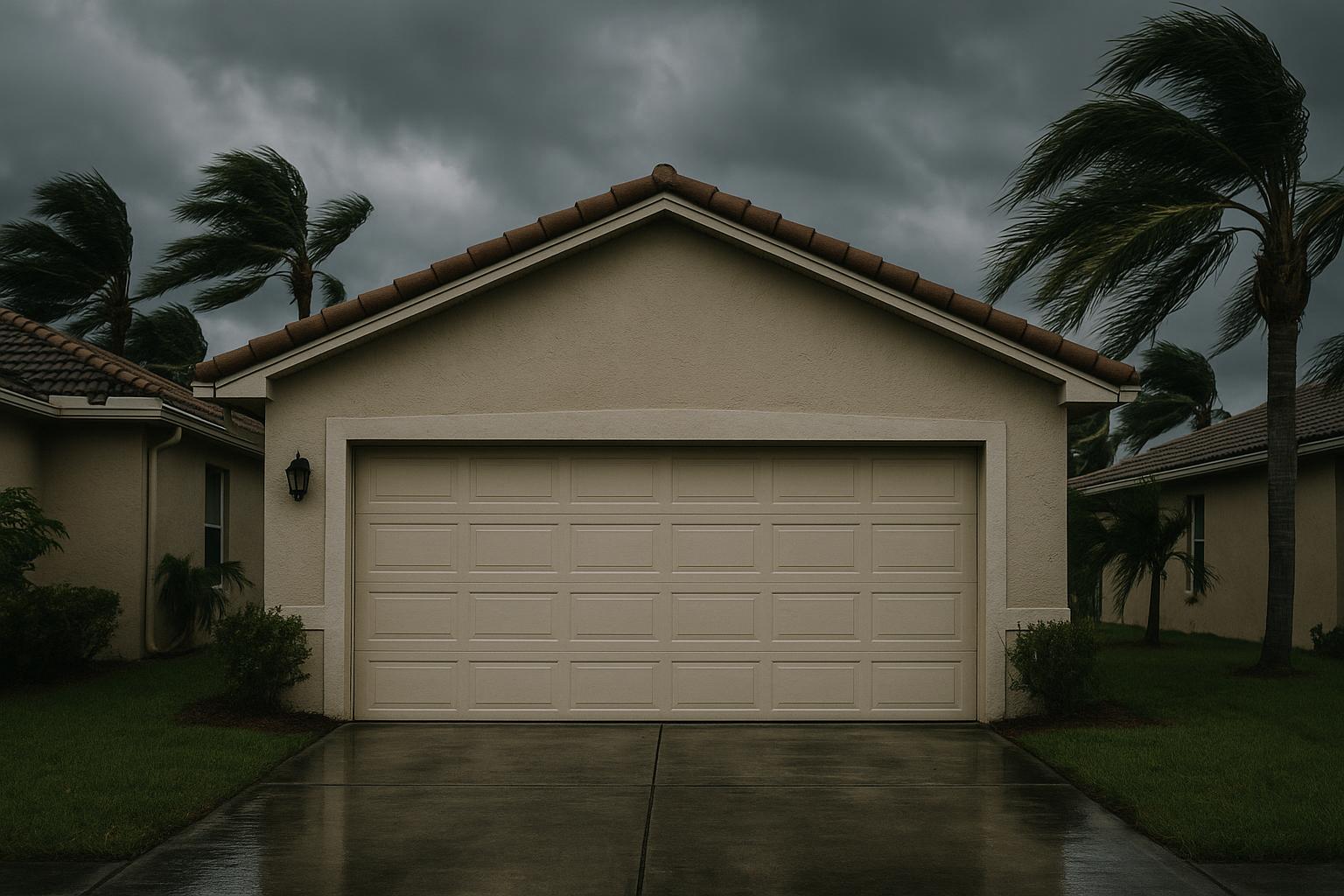
Storms and Your Garage Door: What Every Punta Gorda Homeowner Should Know
Living in Punta Gorda means enjoying beautiful weather most of the year — but it also means dealing with hurricane season, tropical storms, and powerful thunderstorms that can roll through Charlotte County with little warning. When severe weather hits, your garage door is one of the most vulnerable parts of your home. It's also the largest moving component, and if it won't open or close during a storm, it can quickly become a serious problem.
Whether you've lost power, your door is jammed from wind damage, or you're trying to prepare before a storm arrives, this guide covers exactly what to do so you can keep your family safe and your property protected.
Why Storms Cause Garage Door Problems
Garage doors take a beating during severe weather. Here are the most common storm-related issues we see from homeowners across Punta Gorda and Port Charlotte:
- Power outages: Electric garage door openers are useless without electricity, leaving many homeowners unsure how to manually operate their doors.
- Wind damage: High winds can bend tracks, warp panels, or blow debris into the door mechanism.
- Water intrusion: Heavy rain and flooding can corrode springs, damage sensors, and short out electrical components.
- Debris impact: Flying branches, lawn furniture, and other objects can dent or puncture garage door panels.
- Sensor misalignment: Even moderate storms can shift the safety sensors at the base of your garage door, preventing it from closing properly.
How to Manually Open Your Garage Door During a Power Outage
Every garage door opener has a manual release mechanism, but most homeowners have never used it. Here's how to safely disengage your opener and operate your door by hand:
- Make sure the door is fully closed. Never pull the emergency release on a door that's partially open, especially if you suspect a broken spring. The door could come crashing down.
- Locate the red emergency release cord. It hangs from the opener rail, usually near the motor unit. You'll see a red handle at the end of a short rope.
- Pull the cord down and toward the door. This disconnects the trolley from the opener chain or belt, allowing you to move the door manually.
- Lift the door slowly. Use both hands and lift from the bottom. A properly balanced door should feel relatively light — around 10 to 15 pounds of effort. If it feels extremely heavy, stop immediately. You may have a broken spring, and forcing it open could cause injury.
- Secure the door in the open position. If you need to leave it open, use locking pliers or a C-clamp on the track to prevent the door from sliding shut.
Once power is restored, you can re-engage the opener by simply pulling the release cord again in the opposite direction and then pressing your wall button or remote. The trolley will reconnect on the next cycle.
Before the Storm: Preparation Steps
If you know a storm is approaching — and here in Southwest Florida, we usually get a few days of warning — there are steps you can take to protect your garage door and avoid problems during the event:
- Test your manual release. Practice using the emergency cord before you actually need it. You don't want to be figuring it out in the dark during a power outage.
- Clear the area around your garage. Move trash cans, potted plants, bikes, and anything else that could become a projectile in high winds.
- Inspect the weatherstripping. Damaged or missing seals along the bottom and sides of your door allow wind and water to enter your garage.
- Consider a wind-rated garage door. If your door is older and doesn't meet current Florida building codes for wind resistance, upgrading to a hurricane-rated door is one of the best investments you can make. Many insurance companies offer premium discounts for wind-rated garage doors.
- Install a battery backup on your opener. Modern garage door openers from brands like LiftMaster offer integrated battery backup systems that keep your door operational during power outages.
After the Storm: What to Check
Once the weather has passed, don't just hit the button and hope for the best. Take a few minutes to inspect your garage door system before resuming normal use:
Visual Inspection
Walk around the outside and look for obvious damage — dented panels, bent tracks, cracks, or debris lodged in the mechanism. Check the bottom seal and the weatherstripping on both sides of the door frame.
Test the Balance
Disconnect the opener using the manual release and lift the door halfway. Let go carefully. A properly balanced door should stay in place. If it slides up or crashes down, your springs may be damaged and need professional attention.
Check the Sensors
Look at the two small sensors at the bottom of your door tracks. Each should have a steady light — typically one green and one amber. If either light is blinking, the sensors are misaligned or obstructed. Clean them off and gently adjust them until both lights are steady.
Listen for Unusual Sounds
Run the door through a full open-and-close cycle. Grinding, scraping, or popping sounds can indicate bent tracks, damaged rollers, or spring issues that developed during the storm.
When to Call a Professional
Some post-storm garage door issues are easy to handle yourself, but others require professional repair. Call a garage door technician if you notice any of the following:
- The door feels extremely heavy when lifting manually
- Tracks are visibly bent or pulled away from the wall
- Panels are cracked, punctured, or severely dented
- Springs appear stretched, broken, or rusted through
- The opener motor runs but the door doesn't move
- Water has entered the motor housing or control panel
Attempting to repair high-tension springs or bent tracks on your own is dangerous. These components are under extreme force and can cause serious injury if handled improperly.
Protecting Your Garage Door Year-Round
Storm damage isn't always preventable, but regular maintenance goes a long way toward keeping your garage door resilient. We recommend scheduling a professional tune-up at least once a year — ideally before hurricane season begins in June. A maintenance visit typically includes lubricating moving parts, tightening hardware, testing the balance and safety features, and identifying worn components before they fail at the worst possible time.
At Punta Gorda Garage Door, we help homeowners throughout Charlotte County — from Rotonda West to North Port and everywhere in between — keep their garage doors storm-ready and functioning safely. Whether you need a post-storm inspection, a panel replacement, or a full upgrade to a wind-rated door, we're here with honest pricing and fast response times when you need us most.