
Rule of Thumb First
Lubricate the moving metal parts of your garage door twice a year with a silicone or white lithium spray, never WD-40 or axle grease. The exceptions: if you're within a few miles of the coast where salt air accelerates corrosion, or if you've just come through hurricane season with heavy rain and humidity swings, bump that up to every three to four months. Doors that get used multiple times a day, like on a garage that doubles as a workshop, also need more frequent attention than the twice-a-year baseline.
Tools You'll Need
- Silicone-based garage door lubricant or white lithium grease spray (sold specifically for garage doors)
- A shop rag or microfiber cloth
- A soft-bristle brush or old toothbrush for cleaning tracks
- A stepladder
- Work gloves
- A flashlight to check hinges and the torsion spring area
Step-by-Step: How to Lubricate Your Garage Door
- Disconnect the opener. Pull the manual release cord so the door is running on the track alone, not under motor power, while you work.
- Open the door fully and inspect it. Look for rust spots on hinges and tracks, frayed cables, or any hardware that's visibly loose. Salt air and humidity along the Gulf Coast cause surface rust faster than drier climates, so catching it early matters.
- Wipe down the tracks. Use a dry rag to clear out dust, pollen, and the gritty residue that builds up after afternoon downpours. Never lubricate the tracks themselves — rollers need to roll on clean, dry metal, not a slick surface that attracts more dirt.
- Lubricate the hinges. Spray a light coat on each hinge where metal pivots against metal. Work the door up and down a few times by hand so the lubricant gets into the joint.
- Lubricate the rollers, if they're metal. If your door has nylon rollers (most newer installs do), skip lubricating the roller wheel itself — just hit the metal stem and bearing. Nylon doesn't need it and grease just collects grit.
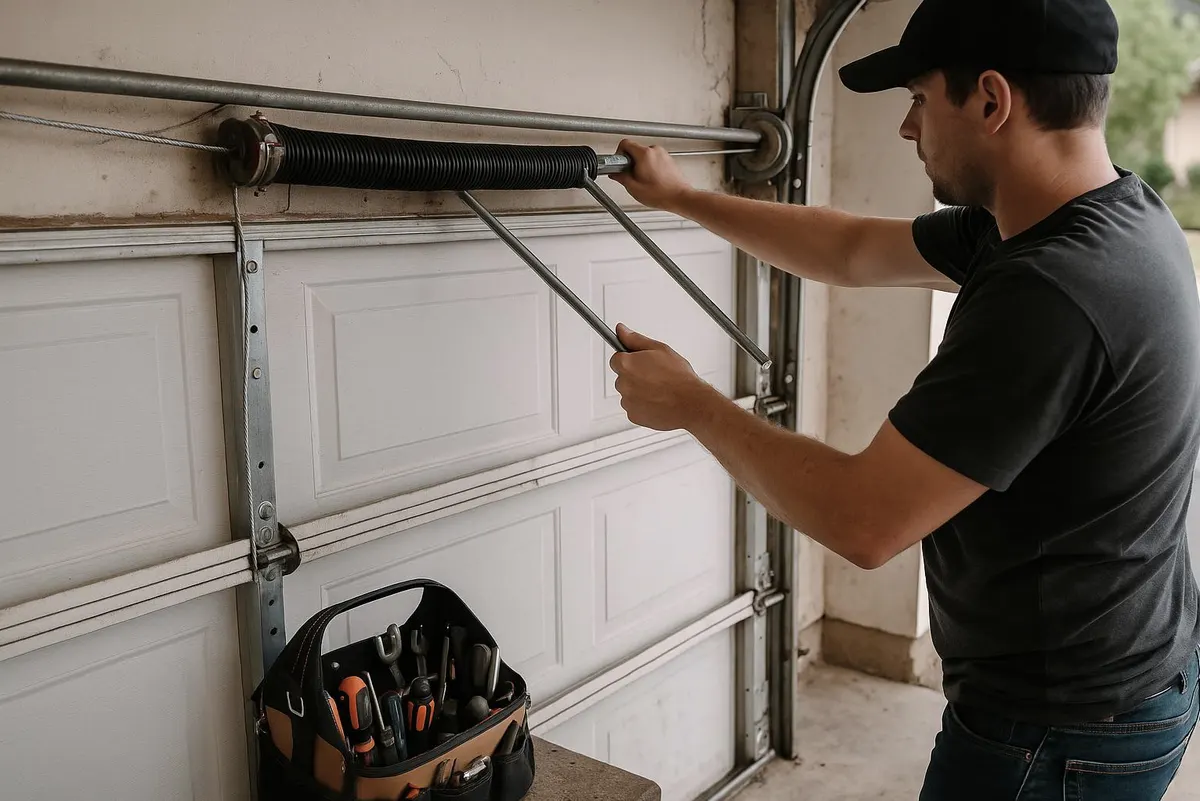
- Spray the springs. A light coat on the torsion spring (the coiled spring mounted horizontally above the door) or extension springs (the stretched springs along the upper tracks) reduces friction and rust. Don't overdo it — a light misting is enough.
- Hit the bearing plates and end bearings. These are the small components at each end of the torsion spring shaft. They take a lot of friction and are often overlooked.
- Lubricate the opener's chain or screw-drive rail. Check your opener's manual first, since belt-drive units need no lubrication at all, while chain and screw drives benefit from a small amount of the same silicone spray.
- Wipe off excess. Any lubricant left sitting on the surface just attracts dust and pollen, which is a losing battle during Florida's humid stretches.
- Reconnect the opener and run a full cycle. Watch and listen for grinding, sticking, or uneven movement. A properly lubricated door should move smoothly and quietly top to bottom.
Products to Use — and What to Avoid
Stick with lubricants made specifically for garage doors: silicone-based sprays or white lithium grease in spray form. Both resist washing out in humidity and won't gum up with dust the way heavier products do.
- Avoid WD-40 as a long-term lubricant. It's a solvent and light penetrant, not a lubricant — it evaporates quickly and can leave parts drier than before, plus it attracts dirt in the short window it's still wet.
- Avoid grease on nylon rollers. It doesn't help and makes a mess that picks up debris.
- Avoid petroleum-based oils on tracks or cables; they break down faster in heat and can drip onto the garage floor.
What a Homeowner Can Handle vs. What Needs a Technician
Cleaning tracks, lubricating hinges and rollers, and spraying the opener rail are all safe, reasonable DIY tasks on a ladder with the door open. What's not a DIY job is anything involving spring tension. Torsion springs are under extreme load, and adjusting, repositioning, or replacing one without the right bars and training can cause serious injury. The same goes for bent tracks, worn cables, or an opener that's grinding gears internally — those call for a technician, not a lubricant.
When to Call Punta Gorda Garage Door
If you've lubricated everything correctly and the door still groans, sags on one side, or the opener strains to lift it, that's usually a sign of worn springs or misaligned tracks rather than a lubrication problem. Our preventive maintenance visits cover a full inspection of springs, cables, and hardware, catching the kind of rust and wear that Charlotte County's salt air and humidity speed up before it turns into a failed spring or a stuck door. If something's already broken, our spring replacement service gets you back up and running safely, with the right hardware for wind-load requirements in storm season.
Give Punta Gorda Garage Door a call for fast, honest service anywhere in Punta Gorda, FL and the surrounding Charlotte County area.