
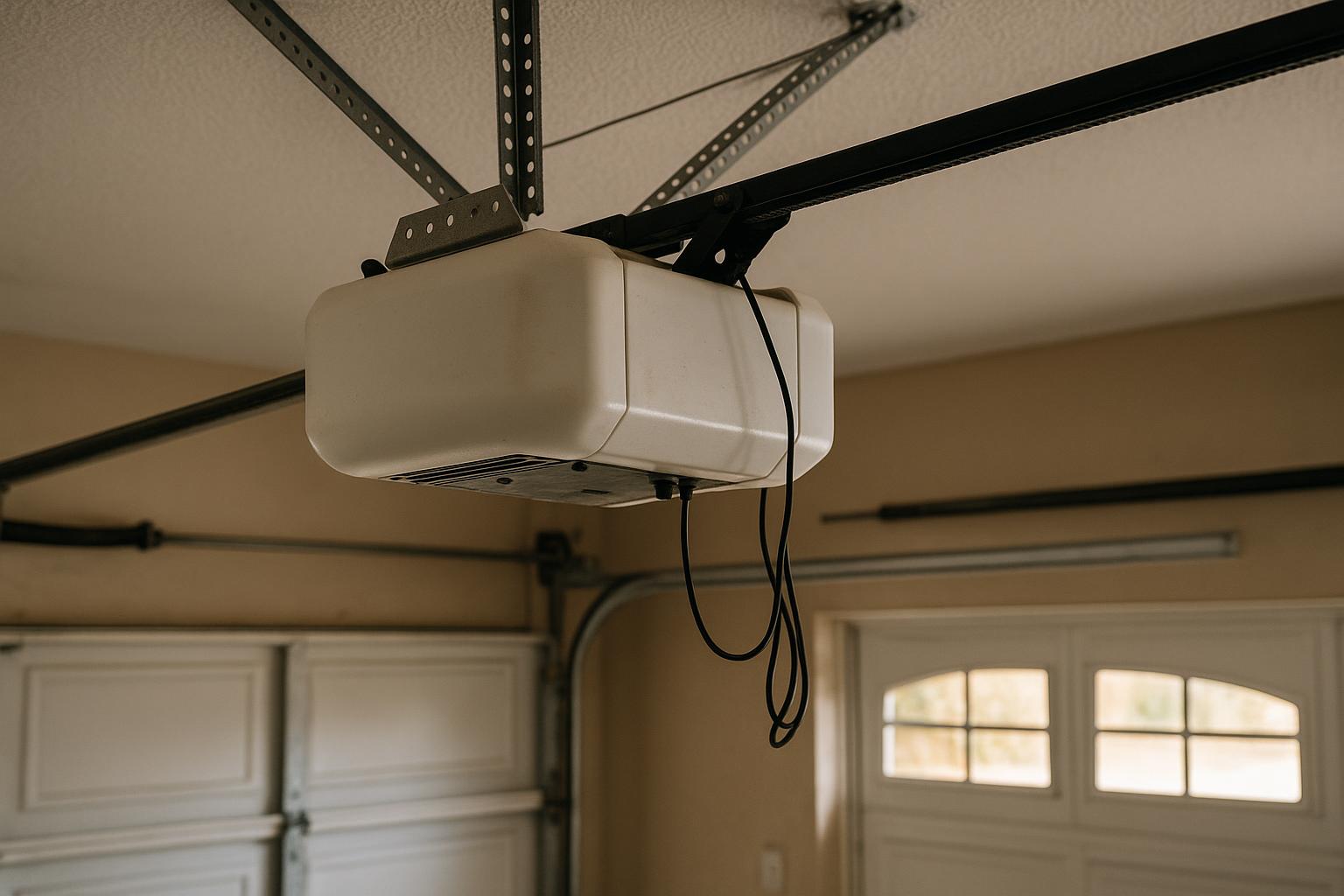
Your Garage Door Opener Won't Last Forever
Most homeowners don't think much about their garage door opener until it stops working entirely. But just like any mechanical device, openers wear down over time and usually give off warning signs well before they quit for good. If you catch those signs early, you can schedule a repair or replacement on your terms — instead of dealing with an emergency when you're running late for work or stuck in a Punta Gorda downpour.
The average garage door opener lasts between 10 and 15 years, depending on usage, maintenance, and the quality of the unit. If yours is approaching that range or you've noticed some unusual behavior, this guide will help you figure out whether it's time for a repair or a full replacement.
7 Warning Signs Your Garage Door Opener Is Going Out
1. The Opener Runs But the Door Doesn't Move
If you hear the motor humming or running but the door stays put, the problem could be a stripped gear inside the opener. This is one of the most common failures in chain-drive and belt-drive openers. The motor still works, but the internal gears that transfer power to the drive mechanism have worn down to the point where they can no longer engage. A professional can often replace the gear assembly without swapping out the entire unit.
2. The Door Moves Slowly or Unevenly
A garage door that creeps open or seems to struggle on its way up may be signaling that the opener motor is losing power. While this can sometimes be traced back to spring issues or track problems, if the springs and tracks are in good shape, the opener itself is likely the culprit. Aging motors gradually lose torque, especially in the humid Charlotte County climate where moisture can accelerate internal corrosion.
3. Excessive Noise or Grinding Sounds
All garage door openers make some noise, but there's a difference between normal operational sounds and grinding, scraping, or rattling that gets worse over time. Chain-drive openers tend to be louder than belt-drive models, but a sudden increase in noise from any type of opener usually points to worn gears, a failing motor, or loose hardware inside the unit. Don't ignore new sounds — they almost always indicate a part that's about to fail completely.
4. The Opener Responds Intermittently
You press the remote and nothing happens. Press it again and the door moves. If this inconsistency is happening regularly, start by replacing the batteries in your remote and checking the wall-mounted control panel. If fresh batteries don't solve the problem, the issue may be with the opener's circuit board or receiver. Electrical components degrade over time, and intermittent response is a classic symptom of a board that's on its way out.
5. The Door Reverses for No Apparent Reason
While we've covered doors that reverse before hitting the floor in a previous post, an opener that causes random reversals at different points during operation — sometimes halfway up, sometimes near the top — may have a failing logic board or faulty safety sensors that are sending incorrect signals. If sensor alignment and obstruction checks don't resolve it, the opener's internal electronics are likely to blame.
6. You Notice a Burning Smell
A burning or overheating smell coming from the opener unit is a serious warning sign. This usually means the motor is overworking, often because of an internal short or because the unit is straining against a mechanical problem it can't overcome. If you notice this, stop using the opener immediately and call a technician. Continuing to run an overheating motor is a fire risk.
7. The Opener Is More Than 15 Years Old
Even if your opener still technically works, units older than 15 years lack modern safety and security features. Older openers may use fixed-code remotes that are easy for intruders to duplicate, and they may not have the auto-reverse safety features required by current standards. Upgrading to a newer model gives you better security, quieter operation, smartphone connectivity, and battery backup options — features that are especially useful during Punta Gorda's storm season when power outages are common.
Should You Repair or Replace?
Not every opener problem requires a full replacement. Here's a general rule of thumb:
- Repair if the opener is less than 8-10 years old and the issue is isolated — a stripped gear, a bad circuit board, or a sensor problem. These are cost-effective fixes that can extend the life of your unit by several years.
- Replace if the opener is over 12-15 years old, requires frequent repairs, or lacks modern safety features. At that point, the cost of repeated repairs starts to exceed the price of a new installation.
When you're weighing the decision, also consider how often you use your garage door. Many families in Punta Gorda and Port Charlotte use the garage door as their primary entry point, which means the opener cycles multiple times a day. Heavy use accelerates wear and tips the math toward replacement sooner.
What to Look for in a New Garage Door Opener
If you decide it's time for a new unit, here are the key factors to consider:
- Drive type: Belt-drive openers are the quietest option and ideal if you have living space above or near the garage. Chain-drive models are more affordable and extremely durable. Screw-drive openers fall somewhere in between.
- Horsepower: A standard single-car door typically needs a 1/2 HP motor. Heavier double doors or insulated doors may require 3/4 HP or more.
- Smart features: Many modern openers integrate with your smartphone, letting you monitor and control the door remotely. Some even send alerts if the door is left open.
- Battery backup: A built-in battery backup keeps your opener functional during power outages — a practical feature for Florida homeowners who deal with hurricanes and summer storms.
- Security: Look for rolling-code technology, which changes the access code every time you use the remote, making it virtually impossible for someone to copy your signal.
Don't Wait for a Complete Failure
A garage door that won't open or close is more than an inconvenience — it's a security issue and can leave your vehicles and belongings exposed. If you've noticed any of the warning signs above, it's worth having a professional take a look before the problem escalates.
At Punta Gorda Garage Door, we diagnose opener issues quickly and give you honest advice on whether a repair or replacement makes the most sense for your situation and budget. We serve homeowners throughout Punta Gorda, Port Charlotte, North Port, Englewood, and the surrounding Charlotte County area with fast response times and straightforward pricing.
If your garage door opener is acting up, don't wait until it fails completely. Give us a call and let's get it sorted out while you still have options.