
Your Garage Door Shouldn't Sound Like That
You press the button, and instead of the smooth hum you're used to, your garage door lets out a grinding screech that makes the neighbors look over. Or maybe it's a rhythmic banging that started a few weeks ago and keeps getting louder. Either way, something's off.
A noisy garage door is more than just an annoyance — it's often an early warning sign that something mechanical is wearing out, misaligned, or about to fail. The good news is that most garage door noises point to identifiable problems, many of which are straightforward to fix when caught early.
Here in Punta Gorda, the combination of heat, humidity, and salt air accelerates wear on garage door components. If your door has started making unusual sounds, here's how to decode what it's telling you.
Squealing or Screeching Sounds
A high-pitched squeal when your garage door moves is one of the most common complaints we hear from homeowners. This noise usually comes from one of two sources:
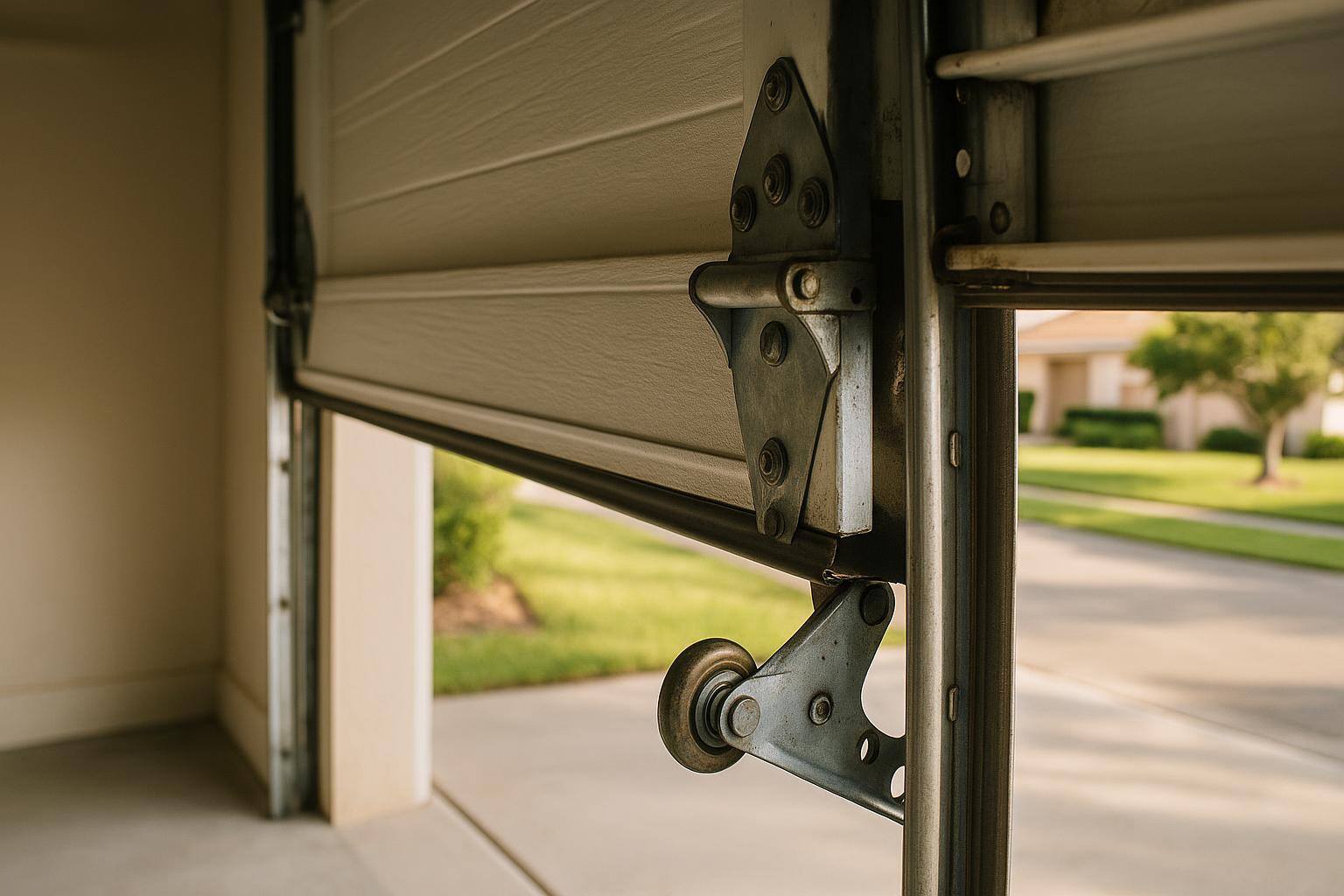
- Dry or worn rollers: Metal rollers running inside the track without adequate lubrication will screech as they grind against the rail. Over time, the rollers themselves wear down, developing flat spots that make the noise even worse.
- Lack of lubrication on hinges and bearings: Every pivot point on your garage door needs periodic lubrication. When hinges dry out, they resist movement and produce that unmistakable metal-on-metal squeal.
The fix is often simple — applying a garage door-specific lubricant (not WD-40, which is a solvent, not a long-term lubricant) to the rollers, hinges, and bearing plates can quiet things down immediately. If the rollers are visibly worn or chipped, replacing them with nylon rollers eliminates the noise and reduces future maintenance.
Grinding or Scraping Noises
Grinding sounds are harder to ignore and usually indicate a more significant issue. Common causes include:
- Misaligned tracks: If the vertical or horizontal tracks have shifted even slightly, the door panels will scrape against the metal as they move. You might also notice the door hesitating or jerking at certain points during travel.
- Worn gear assembly in the opener: Many chain-drive and belt-drive openers use a plastic or nylon gear to transfer power. When this gear wears down, it produces a grinding noise right from the motor unit itself. Left unchecked, the gear will eventually strip completely and the opener will run without moving the door at all.
- Debris in the tracks: Living in Southwest Florida means dealing with sand, small insects, and debris that can accumulate in the door tracks. Even a small obstruction can cause scraping and uneven movement.
Track alignment issues should be handled by a professional since the door is under significant tension. Cleaning the tracks, however, is something you can safely do yourself with a damp cloth — just avoid using grease or oil inside the tracks, as this attracts more debris.
Popping or Snapping Sounds
A loud pop or snap when the door starts moving is one of the more alarming noises you'll hear. This can indicate:
- Torsion spring issues: As springs age, they can develop weak points that cause them to shift or snap under tension. A single loud bang followed by the door refusing to open usually means a spring has broken. This is a dangerous situation — never attempt to repair or replace torsion springs yourself.
- Panel joint stress: The hinges connecting your door panels can pop if they're loose or if the door is slightly out of balance. Tightening the hinge bolts may resolve this, but persistent popping could mean the door's balance needs professional adjustment.
Rattling or Vibrating Sounds
A rattling garage door often points to loose hardware. Over hundreds of open-and-close cycles, nuts, bolts, and screws gradually loosen due to vibration. This is especially common in older installations.
Take a socket wrench and check all the bolts on your door's hinges, brackets, and track mounts. Tighten anything that's loose, but be careful not to overtighten — you can strip the holes or warp the brackets.
Other rattling culprits include:
- A loose chain on a chain-drive opener: If the chain has too much slack, it will slap against the rail and create a rattling vibration throughout the garage. Adjusting the chain tension usually solves this.
- Unsecured opener mounting: The opener unit itself can vibrate against the ceiling if its mounting brackets have loosened. Adding rubber vibration pads between the brackets and the ceiling can reduce noise significantly.
Banging When the Door Closes
If your garage door slams shut with a loud bang instead of settling gently, the problem is almost always related to broken or weakened springs. Healthy springs counterbalance the door's weight so the opener can lower it in a controlled manner. When springs lose tension — or when one spring in a two-spring system breaks — the full weight of the door drops faster than the opener can manage.
This puts enormous stress on the opener, the tracks, and the door panels themselves. If your door has started banging shut, stop using it and call a professional. Continued use can damage the opener motor and bend the tracks, turning a spring replacement into a much more expensive repair.
When to DIY and When to Call a Pro
Some noise-related fixes are safe for homeowners to handle:
- Lubricating rollers, hinges, and springs with a silicone-based garage door lubricant
- Tightening loose bolts and screws on hinges and brackets
- Cleaning debris from the tracks
- Adjusting chain tension on the opener (consult your owner's manual)
However, certain repairs should always be left to a trained technician:
- Anything involving torsion springs
- Track realignment
- Opener gear replacement
- Rebalancing the door
These tasks involve components under high tension or require specialized tools. Attempting them without experience can result in serious injury or further damage to your door system.
Don't Ignore the Warning Signs
A noisy garage door is rarely just a cosmetic problem. Those sounds are mechanical signals that something needs attention. Addressing them early almost always costs less than waiting for a full breakdown — and in Punta Gorda's climate, where humidity and salt air accelerate corrosion, small issues can escalate quickly.
If your garage door has started making noises you can't explain or fix with basic lubrication, Punta Gorda Garage Door can diagnose the problem and get your door running quietly again. We serve homeowners throughout Charlotte County, including Port Charlotte, North Port, Englewood, and Rotonda West, with honest assessments and upfront pricing.
Give us a call and tell us what your door sounds like — chances are, we've heard it before and know exactly what it needs.