
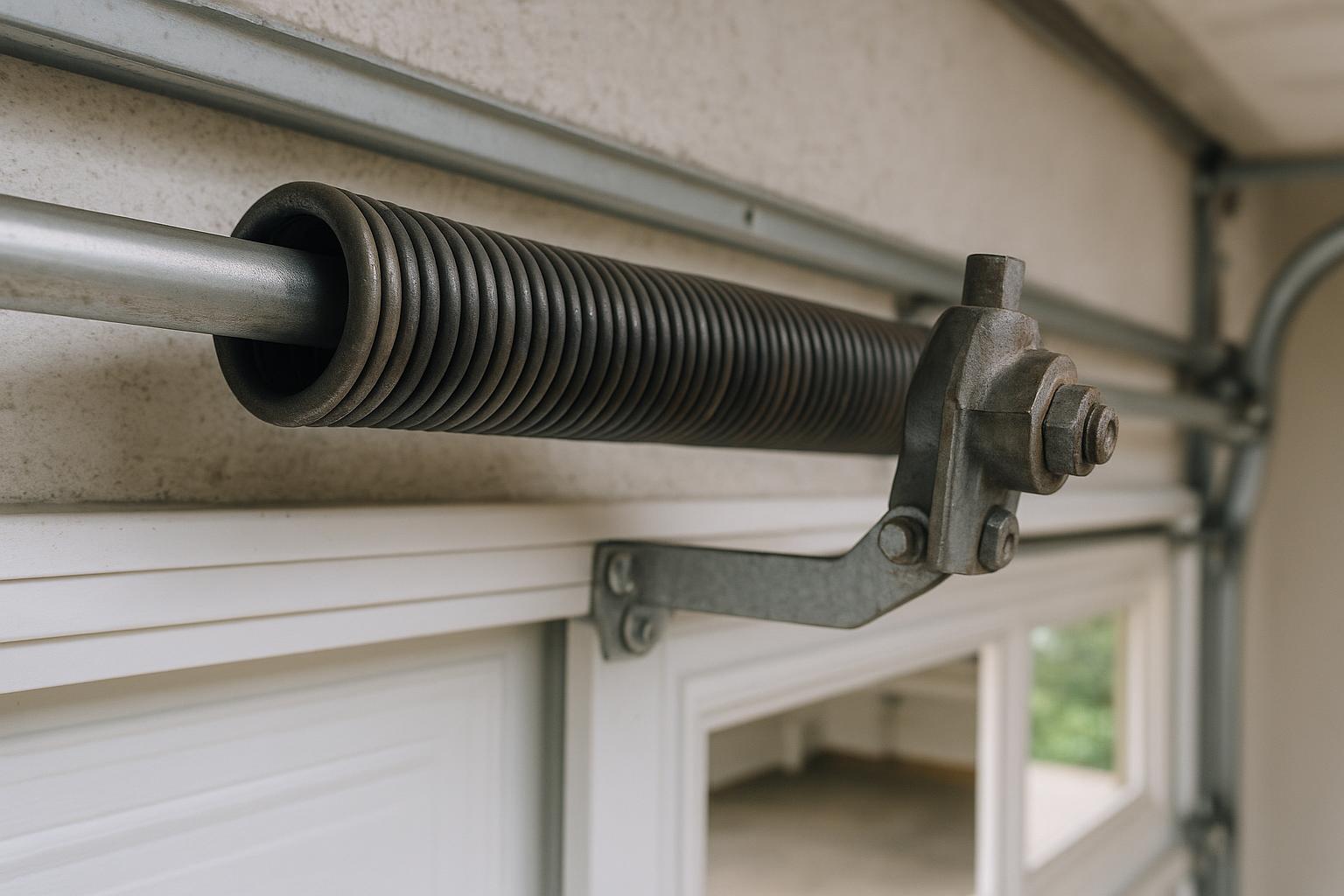
Your Garage Door Springs Are Doing More Work Than You Think
Every time you open and close your garage door, the springs are doing the heavy lifting — literally. A standard two-car garage door can weigh between 150 and 250 pounds, and without properly functioning springs, your opener alone couldn't move it. Springs counterbalance that weight, making the entire system work smoothly and safely.
But like any mechanical component under constant stress, garage door springs wear out over time. For homeowners in Punta Gorda, where we use our garages daily — whether it's heading out for errands on US-41 or pulling in after a day on the harbor — those cycles add up fast. Understanding when your springs need replacement can save you from an unexpected breakdown, costly damage, or even a dangerous situation.
How Long Do Garage Door Springs Last?
Garage door springs are rated by cycle life. One cycle equals one full open-and-close of the door. Most standard torsion springs are rated for approximately 10,000 cycles, which translates to roughly 7 to 10 years for the average household that opens and closes their garage door 3 to 4 times per day.
However, several factors can shorten or extend that lifespan:
- Frequency of use: If you use your garage as your primary entrance — as many Punta Gorda homeowners do — you may be running 6 to 8 cycles per day, cutting your spring life nearly in half.
- Climate and humidity: Living in Southwest Florida means our springs are exposed to high humidity and salt air, especially in areas closer to Charlotte Harbor. This accelerates rust and corrosion, weakening the metal over time.
- Maintenance habits: Springs that are lubricated regularly and part of a preventive maintenance routine will last longer than neglected ones.
- Spring quality: Not all springs are created equal. Higher-cycle springs (rated for 20,000 or even 30,000 cycles) are available and can be a smart investment during replacement.
Types of Garage Door Springs
There are two main types of springs used in residential garage doors, and knowing which type you have helps you understand what to expect:
Torsion Springs
These are mounted horizontally above the garage door opening. They use torque to lift the door and are the most common type found in modern garage door systems. Torsion springs tend to last longer and provide smoother, more controlled movement. Most homes in neighborhoods across Punta Gorda and Port Charlotte have torsion spring systems.
Extension Springs
These run along the horizontal tracks on either side of the door and stretch to create the force needed to lift it. Extension springs are more common on older or lighter doors. They typically have a shorter lifespan and can be more dangerous when they break if safety cables aren't installed.
Warning Signs Your Springs Are Wearing Out
Springs rarely fail without warning. Here are the signs that your garage door springs are nearing the end of their life:
- The door feels heavier than usual: If you disconnect the opener and try to lift the door manually, a properly balanced door should stay open about three to four feet off the ground. If it slams down or feels extremely heavy, the springs are losing tension.
- Visible wear or gaps in the coils: Look at your torsion spring above the door. If you see gaps between the coils or stretching, the spring is failing. A fully broken spring will have a visible gap in the middle.
- The door opens unevenly: If one side of the door rises faster than the other, one spring may be weaker or broken, especially on systems with two torsion springs.
- Loud bang from the garage: Many homeowners in Punta Gorda have told us they heard a loud bang — like a firecracker — coming from their garage. That sound is often a spring snapping. If this happens, do not try to operate the door.
- The opener struggles or stops working: When springs lose their counterbalance, the opener has to work much harder. This can cause the motor to overheat, strip gears, or stop functioning altogether.
- Rust on the springs: Rust weakens the metal and increases friction, both of which shorten spring life significantly. In our humid Charlotte County climate, this is one of the most common issues we see.
Can You Replace Garage Door Springs Yourself?
We strongly advise against it. Garage door springs are under extreme tension — a torsion spring stores enough energy to cause serious injury or even death if handled improperly. Every year, thousands of people across the country are injured attempting DIY spring replacement.
Professional technicians have the specialized tools, training, and experience to replace springs safely. At Punta Gorda Garage Door, our team handles spring replacements throughout Charlotte County every week. We know the right spring sizes for common door configurations in local homes, and we carry high-quality parts so the job gets done in a single visit.
Should You Replace Both Springs at Once?
If your garage door has two torsion springs and one breaks, we almost always recommend replacing both at the same time. Here's why:
- Both springs have the same age and wear. If one broke, the other is likely close behind.
- Mismatched springs cause uneven tension, which puts extra stress on the newer spring and can damage your opener or tracks.
- It saves money on labor. Since the technician is already there with the door disassembled, replacing both springs costs significantly less than two separate service calls.
How to Extend the Life of Your Garage Door Springs
While springs will eventually wear out no matter what, you can get the most out of them with a few simple practices:
- Lubricate your springs every few months with a silicone-based garage door lubricant. This reduces friction and helps prevent rust — especially important in Punta Gorda's humid environment.
- Schedule annual preventive maintenance. A professional inspection can catch early signs of wear before a spring breaks unexpectedly.
- Upgrade to high-cycle springs during your next replacement. They cost a bit more upfront but can double or triple the lifespan of standard springs.
- Keep the door balanced. If you notice the door sitting crooked or not staying in place when opened halfway, call a technician to adjust the spring tension.
When It's Time, We're Here to Help
If your garage door springs are showing signs of wear — or if one has already broken — don't wait for the problem to get worse. A broken spring means your garage door is essentially out of commission, and attempting to force it open can damage the door, the opener, or the tracks.
Punta Gorda Garage Door offers fast, reliable spring replacement for homeowners across Punta Gorda, Port Charlotte, North Port, Englewood, Murdock, and Rotonda West. We provide upfront pricing with no hidden fees, and most spring replacements are completed the same day you call.
Your garage door works hard for you every single day. Make sure the springs keeping it running are up to the job.